
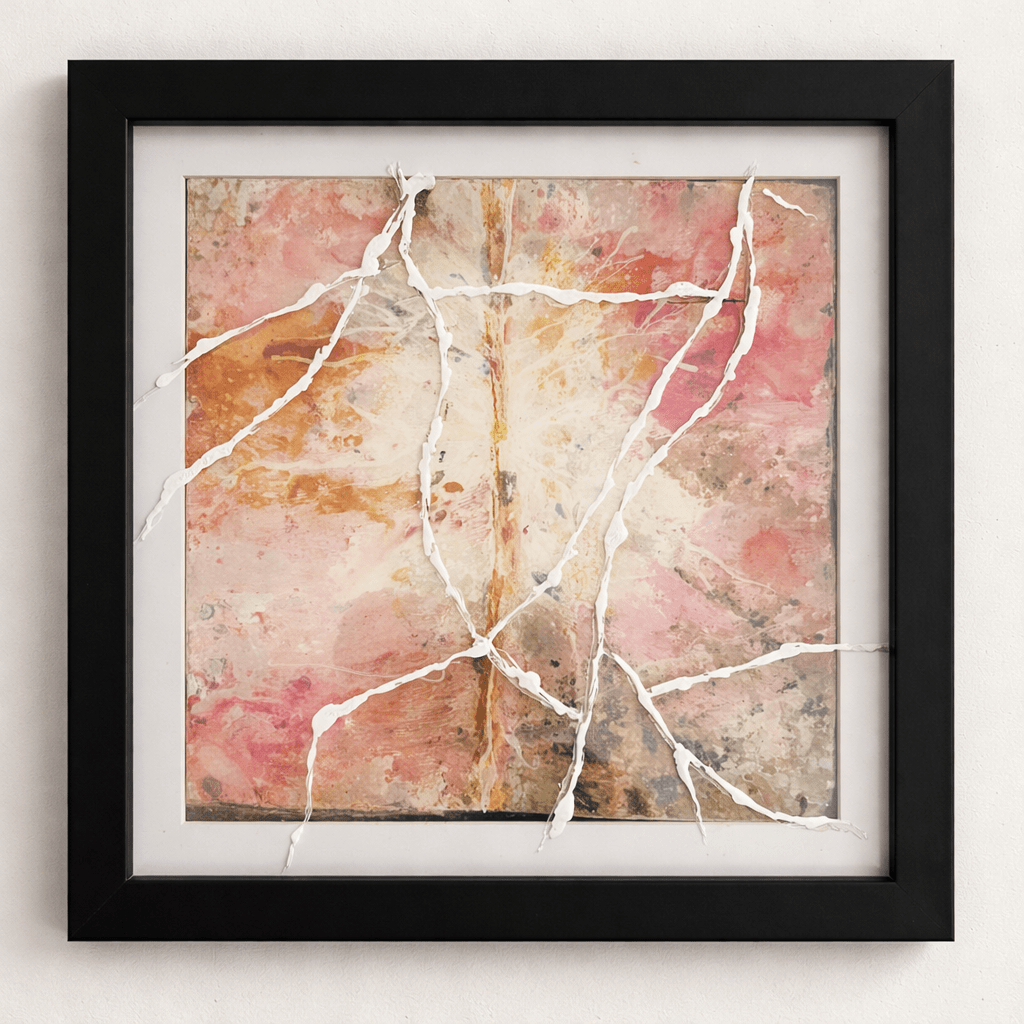
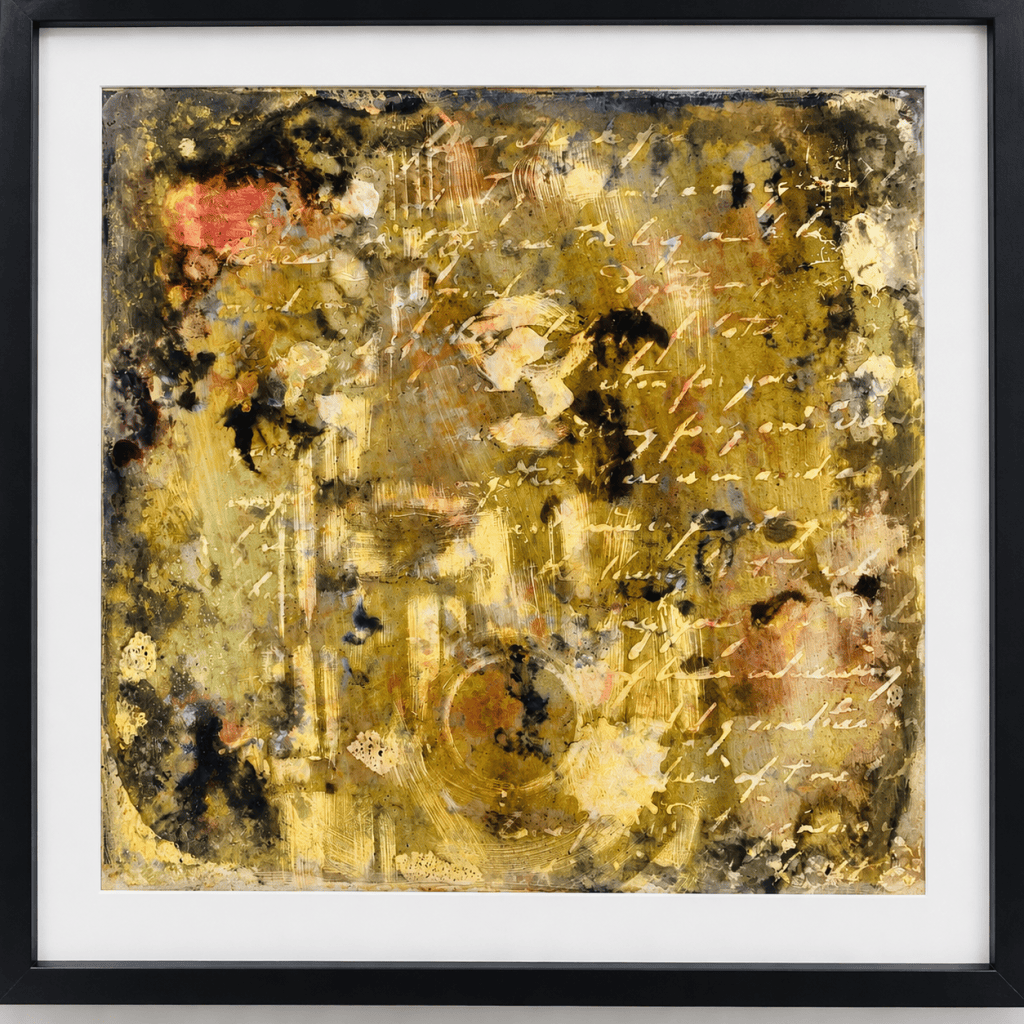
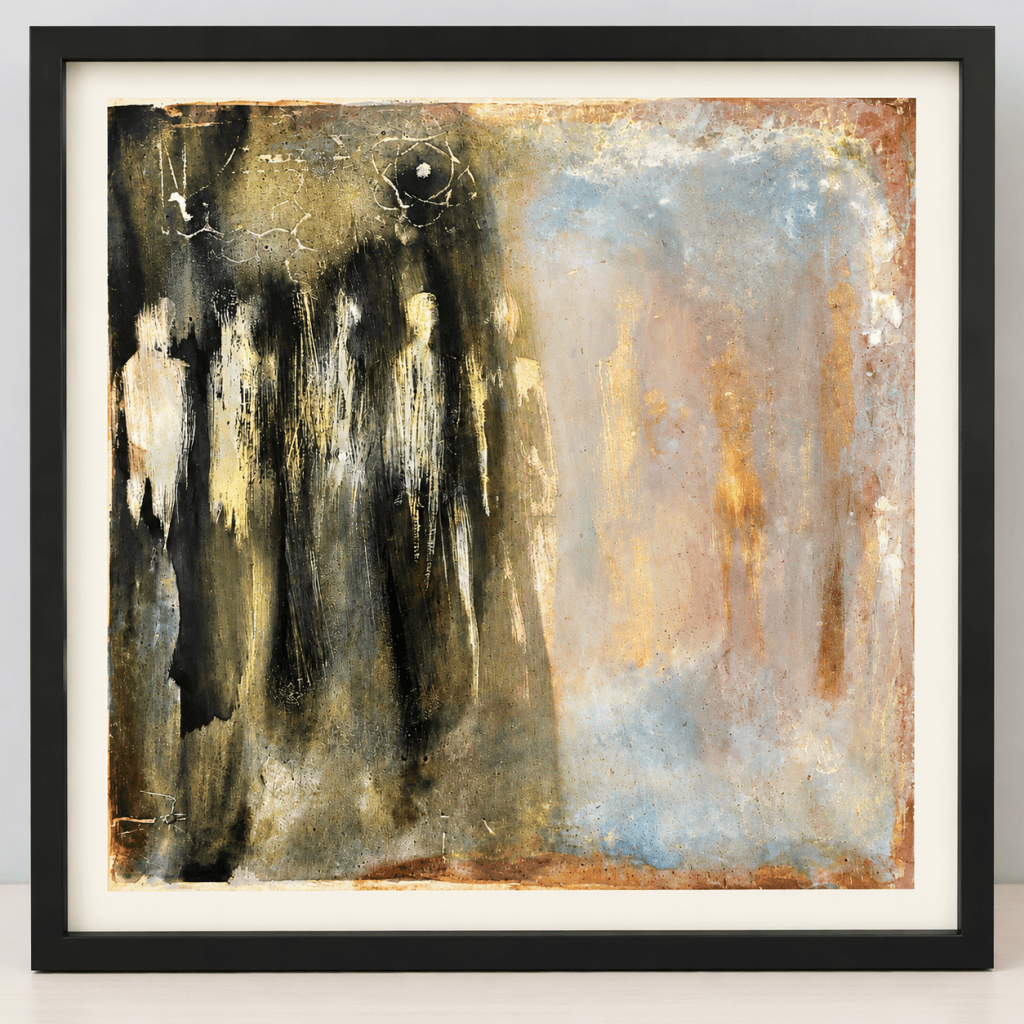
Formed through heat, pressure, and an element of unpredictability, this work explores the moment where control dissolves and transformation begins.
A central vertical rupture divides the surface, not as a flaw to be hidden, but as a structural force that defines the composition. The fractures, subtly traced with gold, echo the philosophy of kintsugi — where damage is not erased, but integrated as part of the object’s history.
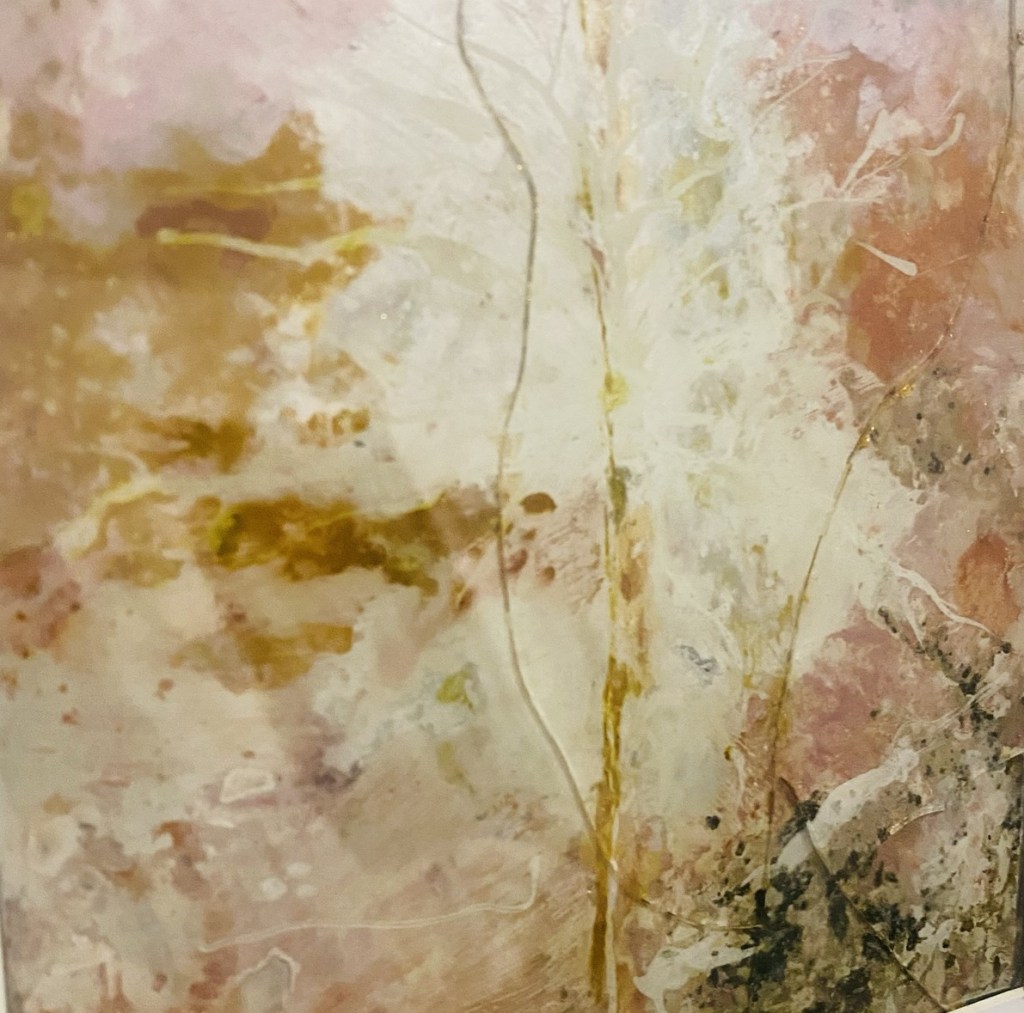
Soft fields of pink, mineral gold, and diffused textures shift across the surface, moving between presence and dissolution. The composition holds a delicate tension between density and openness, between what is breaking apart and what is still emerging.
Rather than representing destruction, the work inhabits a state of transition — a threshold where instability becomes a necessary condition for new form.
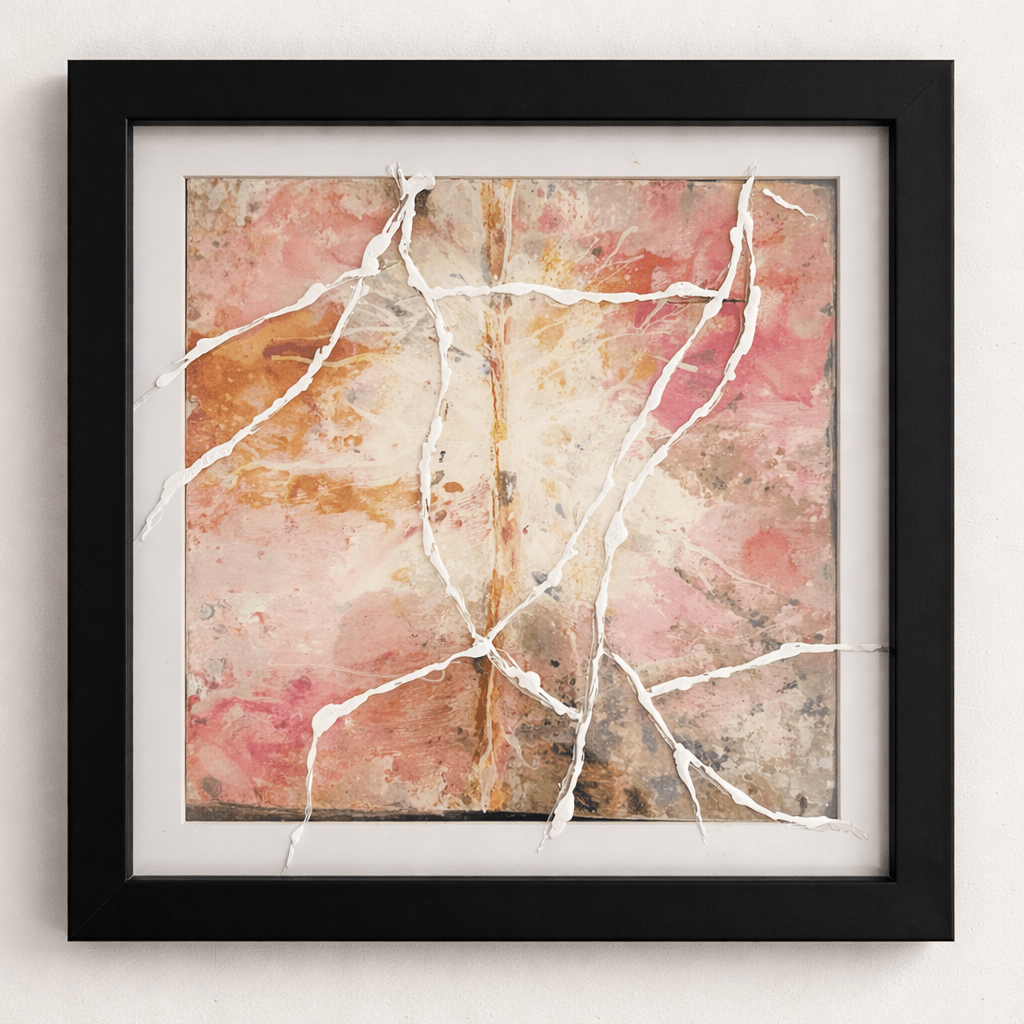
Beneath this network, layers of pigment unfold in muted mineral tones — coral, ash, ochre, and softened pinks — suggesting sedimentation, erosion, and the passage of time. The central vertical axis introduces a moment of tension, anchoring the composition while destabilising it.
Materiality plays a critical role. The elevated surface interrupts light, casting subtle shadows that shift with perspective, reinforcing the work’s spatial and tactile presence. What appears broken is, in fact, actively organising itself.
Rather than presenting fracture as failure, Fractured Alignment positions it as a necessary condition for reconfiguration — where disruption becomes the framework through which form emerges.
Kiln-fired hand-painted glass (1.5 mm)
Size: 18 × 18 cm
Light-reactive surface
One-of-a-kind piece


Leave a Reply