
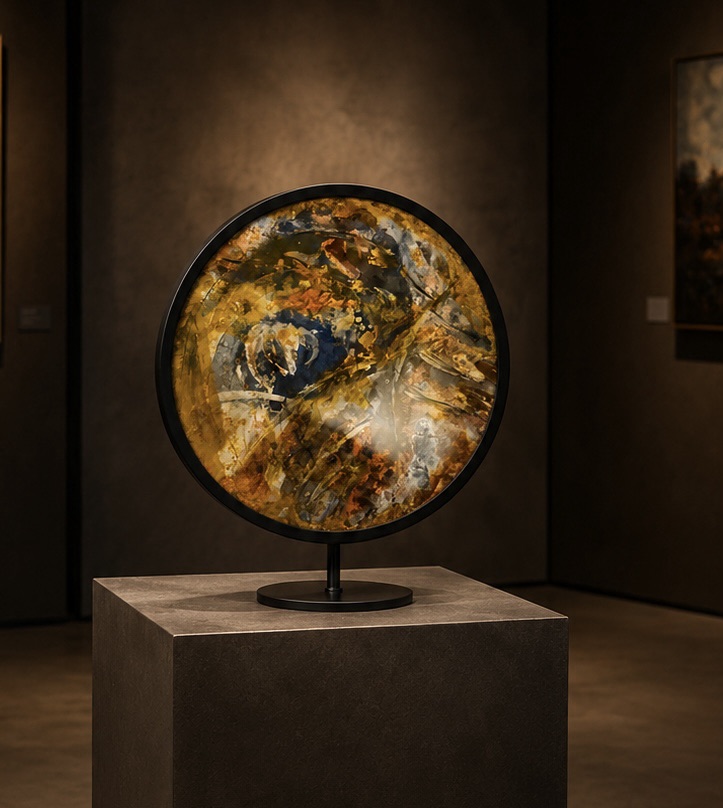
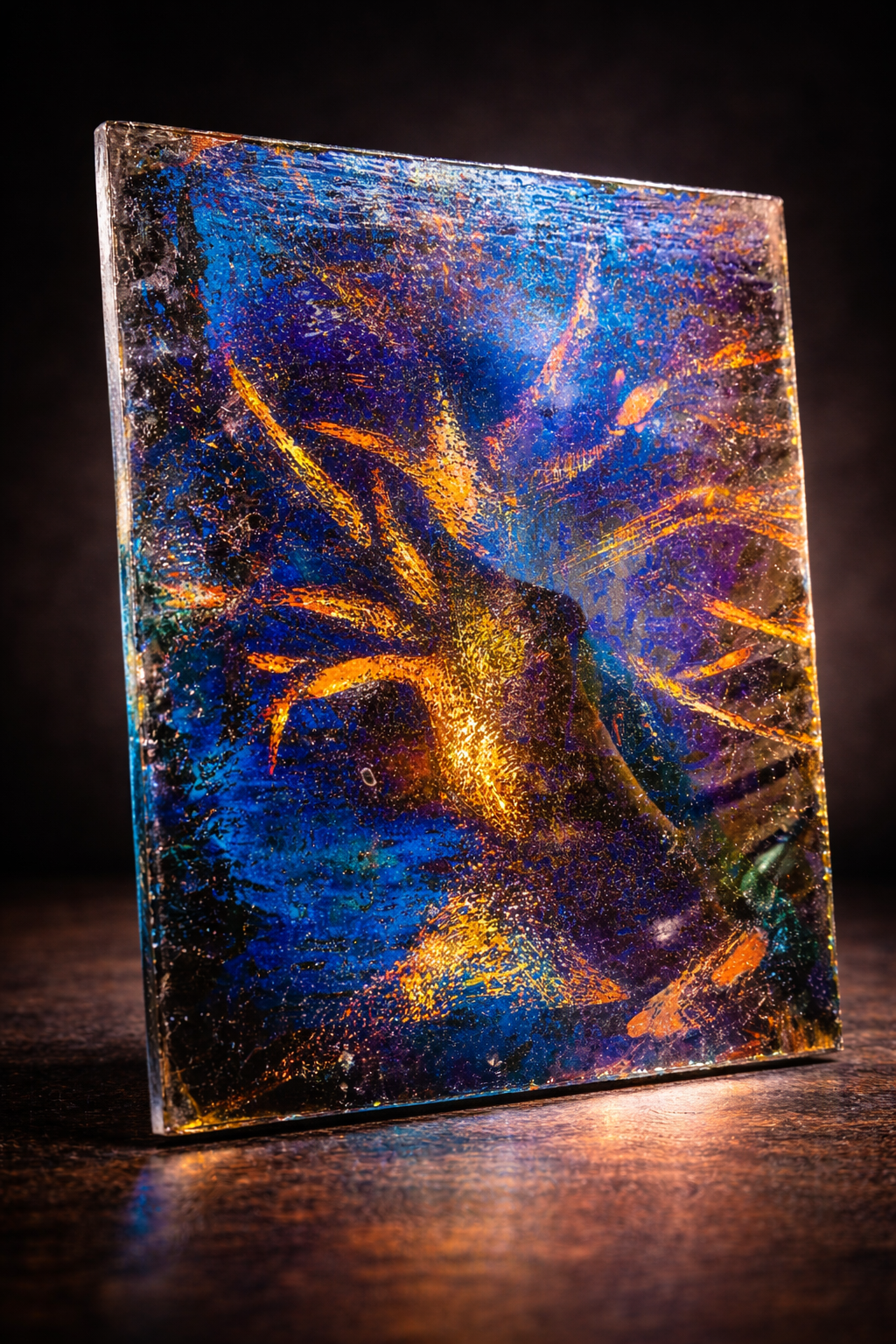
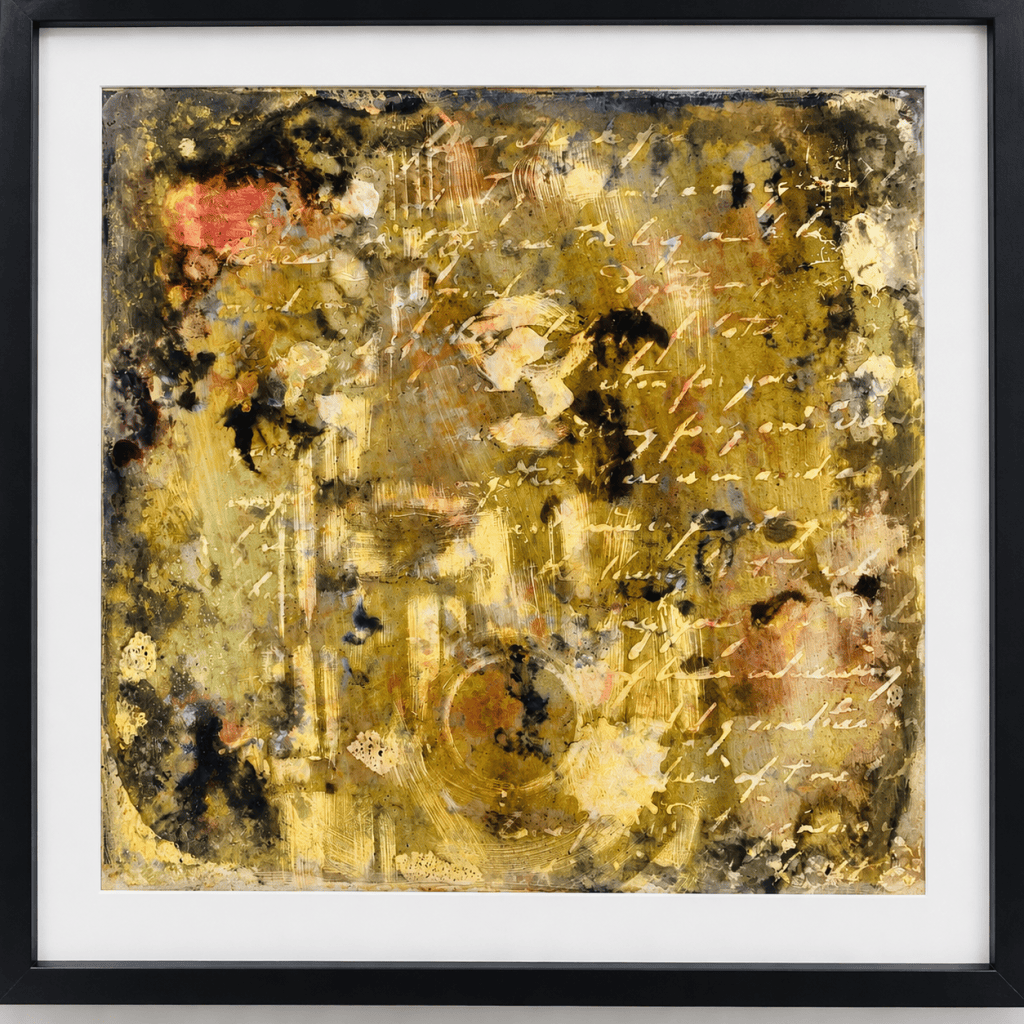
Kiln-fired mixed media on glass
13 × 18 cm
Luminous Fault investigates the fragile territory where fracture becomes illumination. Created through a layered kiln-fired process on glass, the work transforms disruption into a generative force, revealing how instability can produce unexpected beauty and meaning.
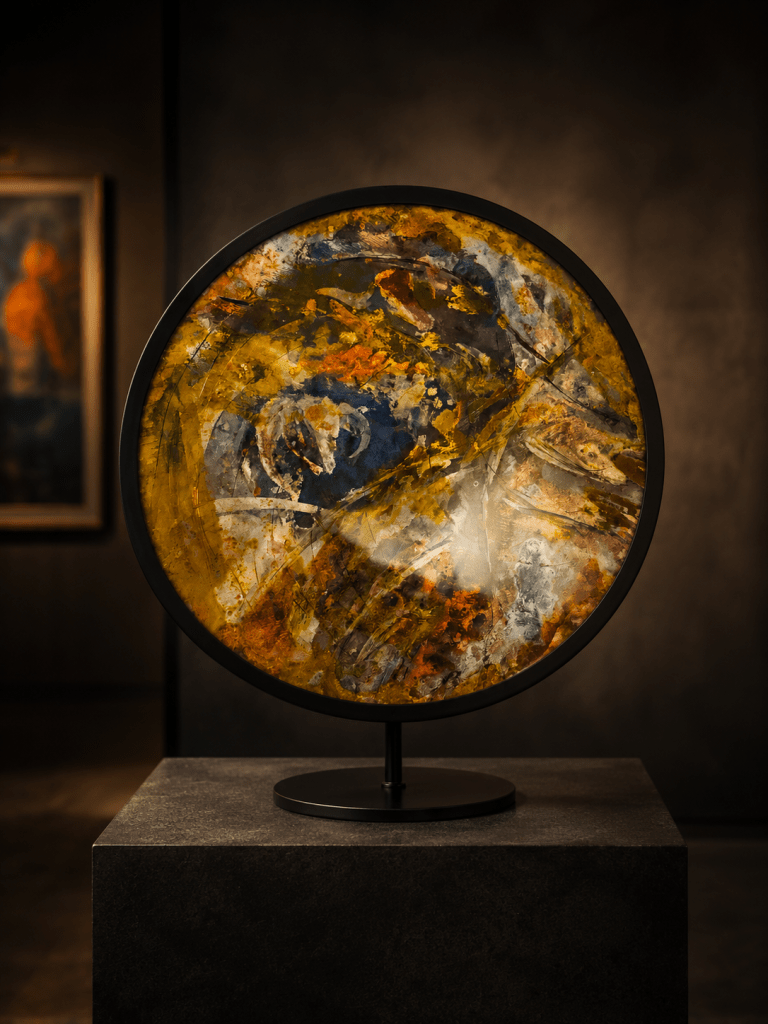
Rather than concealing traces of tension, the composition embraces them. Fractures, surface shifts, and material interruptions become active participants in the image, shaping its visual rhythm and directing the movement of light across the work. Opacity and transparency coexist in a dynamic balance, allowing reflection, depth, and ambiguity to continuously alter the viewer’s perception.
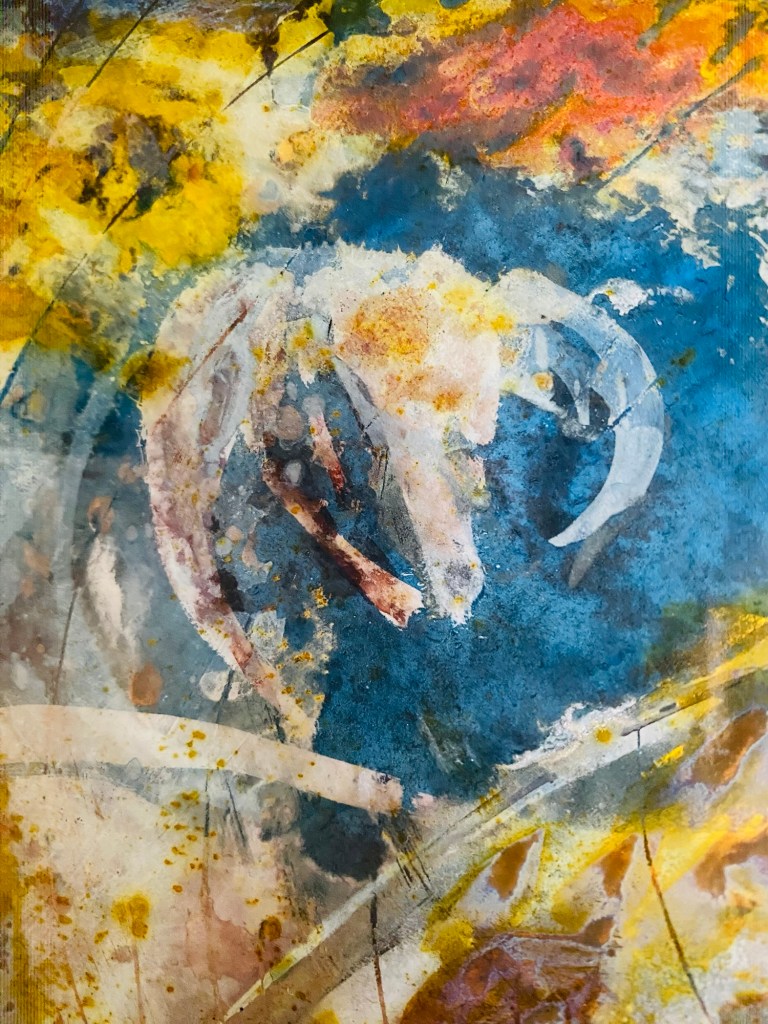
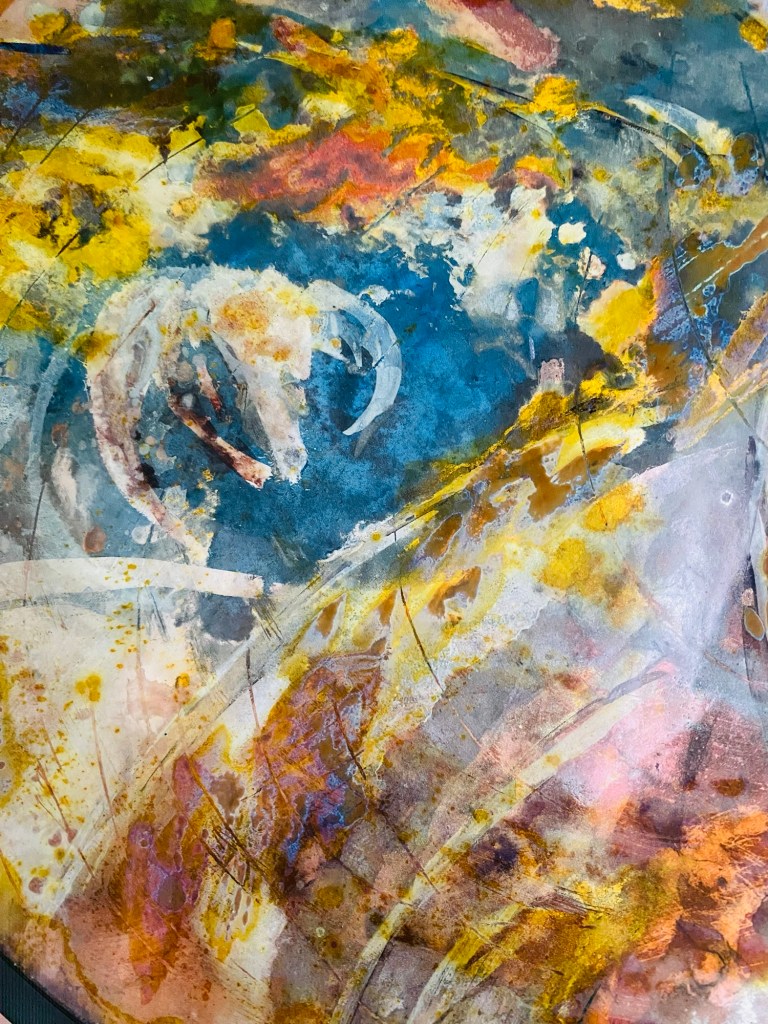
Its intimate scale invites close observation. Layers emerge gradually, revealing a dense network of marks, textures, and luminous passages that reward sustained attention. Light is not merely reflected by the surface; it becomes embedded within the structure of the work itself.
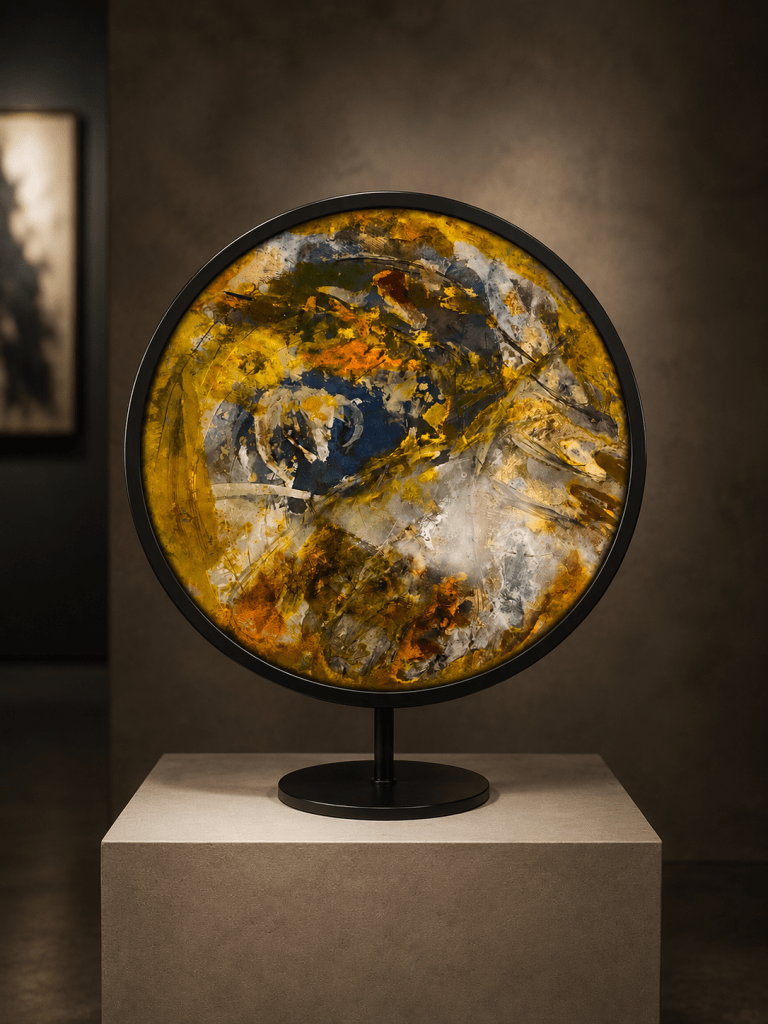
Through the transformation of glass under heat, Luminous Fault reflects on change as an ongoing process rather than a fixed event. The fault line functions not as a point of rupture, but as a threshold—a place where material, perception, and possibility converge.
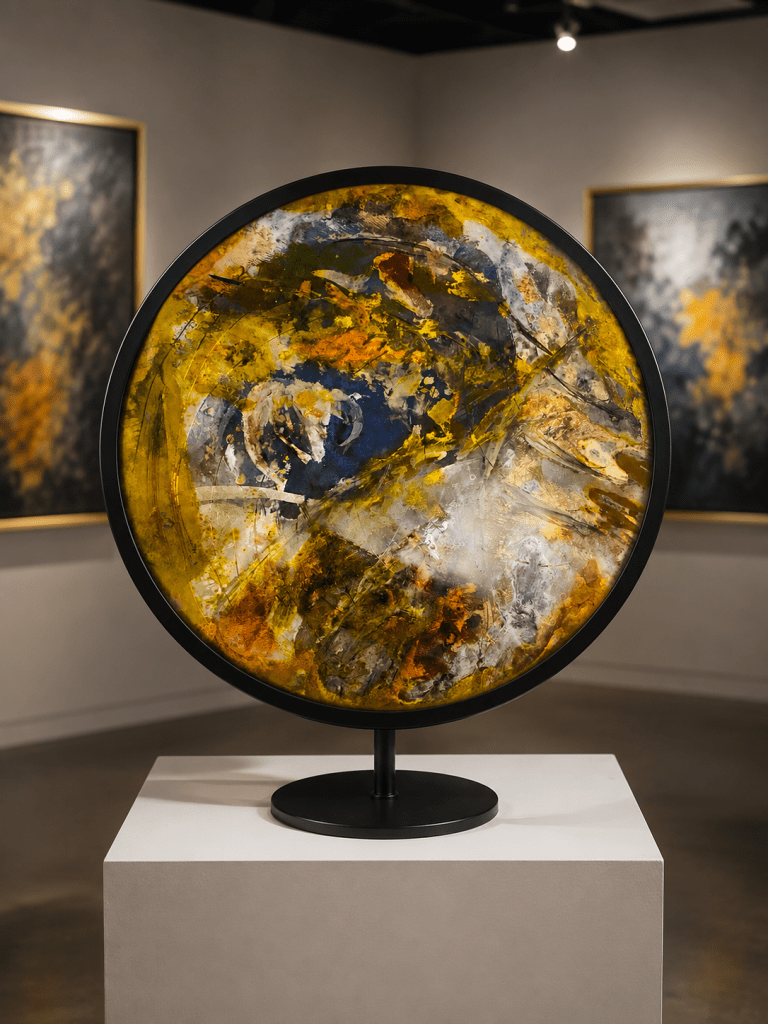
The work proposes that what appears broken may also become a source of radiance, renewal, and emergence.
My Process
My work is created through a meticulous process of painting and firing multiple layers onto glass. In many ways, it is similar to building layers in an oil painting, but instead of simply applying paint, each layer must be permanently fused into the glass in a kiln before the next one can begin.
The process is slow and highly demanding. I paint one layer, fire it, then paint the next and fire it again. This cycle is repeated many times until the final image emerges.
One of the greatest challenges is that each new layer gradually obscures the previous ones. As the work develops, I can no longer clearly see what lies beneath the surface. I must rely on careful planning, experience, and memory, trusting that each hidden layer will contribute to the final composition exactly as intended.
Unlike painting on canvas, every firing is permanent. There is very little opportunity to correct mistakes, so each decision must be made with precision and foresight.
For me, I am not simply painting on glass—I am building with light. Each fired layer becomes part of the glass itself, creating depth, luminosity, and subtle variations that change as the light passes through the work. The finished piece reveals itself differently throughout the day, inviting the viewer to discover new details with every encounter.


Leave a Reply