
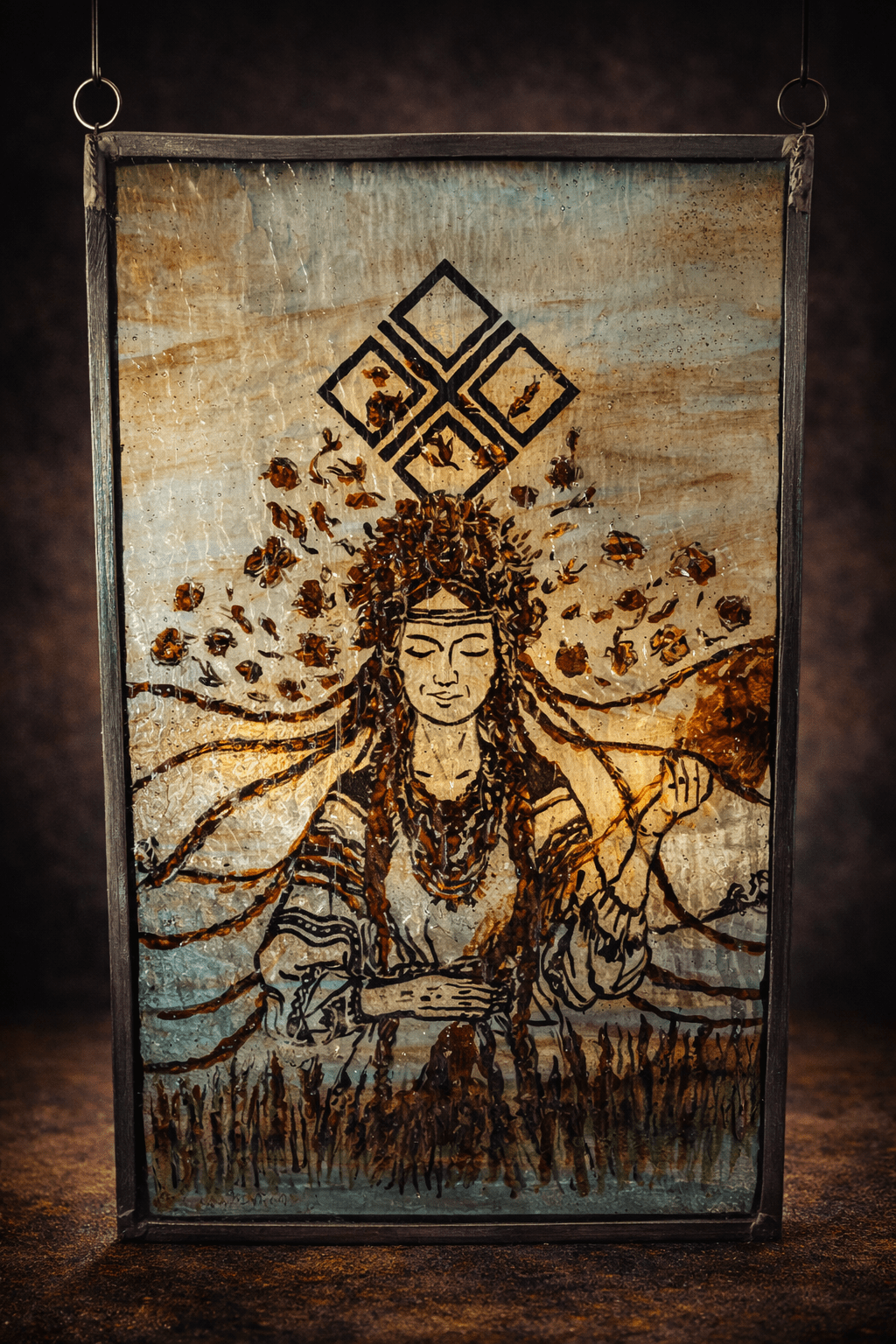
In the rich tapestry of Slavic mythology, Mokosz, also known as Mokosh or Mokoša, holds a prominent place as the goddess of the earth, fertility, and women’s work. Revered across various Slavic cultures, Mokosz represents the nurturing and life-giving aspects of nature, embodying the interconnectedness of the earth, women, and the cycles of life.
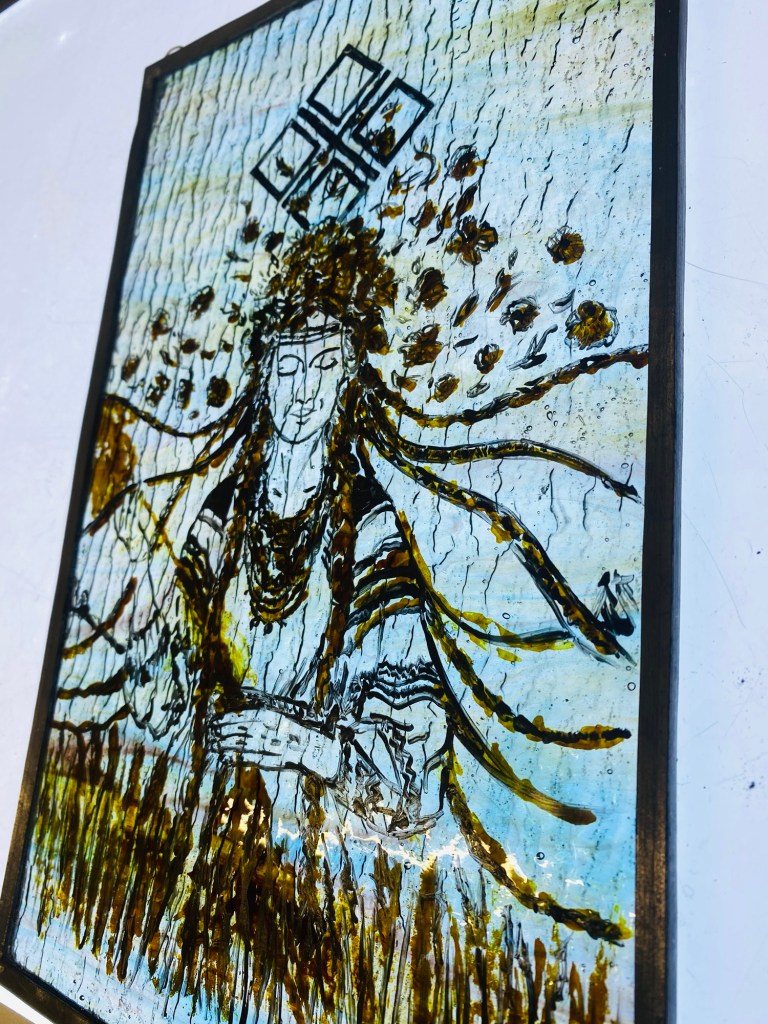
Mokosz is one of the oldest deities in the Slavic pantheon, with her worship predating the arrival of Christianity in the region. Her name is thought to derive from the Proto-Slavic word mok, meaning “wet” or “moist,” which reflects her association with fertility and the earth’s nurturing qualities. This connection to moisture and earth ties her to agricultural abundance, childbirth, and the feminine principle of creation and sustenance.
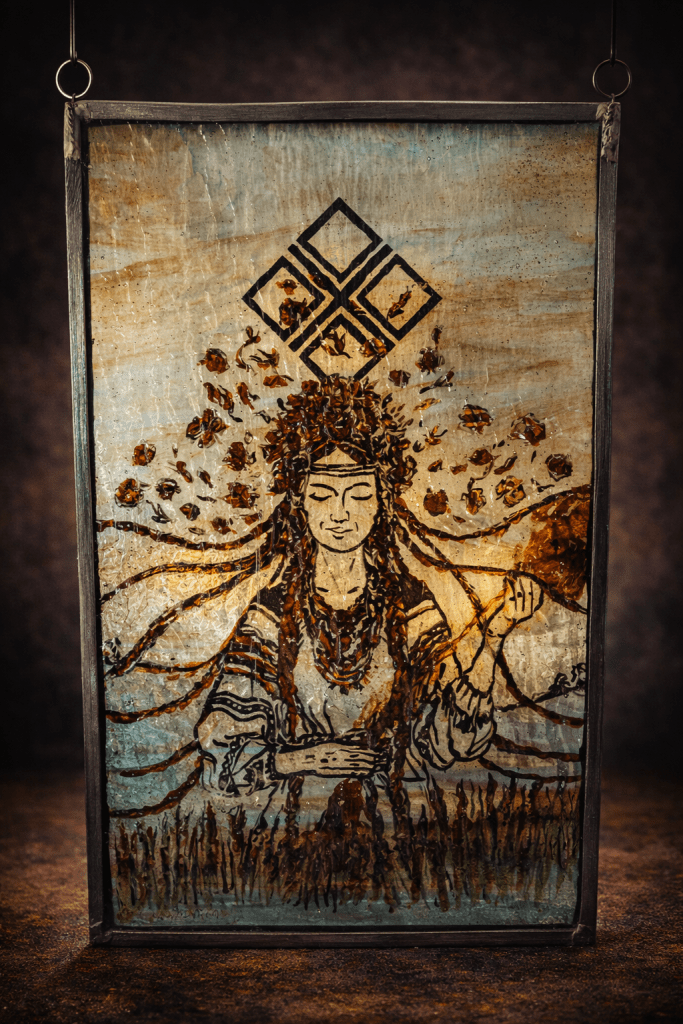
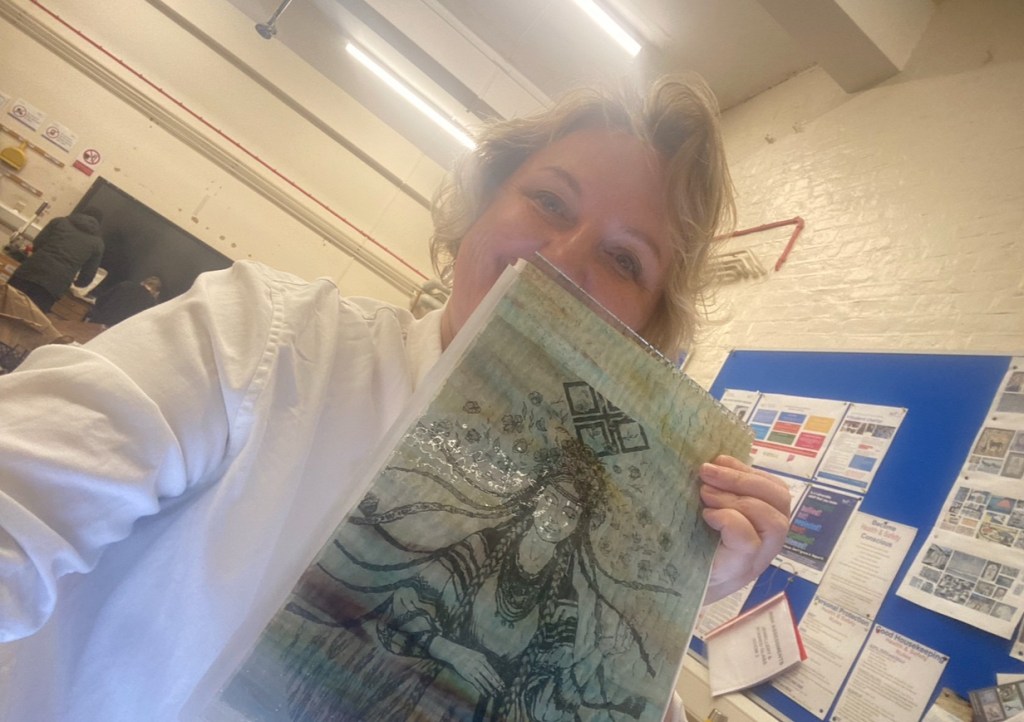
Stained glass painted and fired @monikatkaczyk
Symbolism and Representation
Often depicted as a mature woman, Mokosz is associated with weaving and spinning, both of which are traditional female activities symbolizing the threads of life and fate. In art and iconography, she is sometimes shown with a spindle or distaff, tools of spinning, which further emphasize her role as a guardian of women’s work and domestic life.
Mokosz’s association with water and fertility also links her to natural elements like springs, rivers, and rain, essential for the growth of crops and the prosperity of communities. As a goddess of the earth, she embodies the nurturing aspects of soil and vegetation, ensuring bountiful harvests and the continuation of life.
Worship and Rituals
Worship of Mokosz was deeply intertwined with agricultural practices and the rhythms of the seasons. She was venerated during planting and harvest times, with rituals aimed at securing her favor for abundant crops and protection against natural calamities. Offerings to Mokosz typically included bread, milk, and wool, all symbols of sustenance and domestic life.
One of the primary festivals dedicated to Mokosz was celebrated in the spring, coinciding with the beginning of the agricultural cycle. This festival involved communal feasts, dances, and rituals performed to invoke her blessings for the upcoming growing season. Additionally, women often performed specific rites to honor Mokosz, seeking her guidance and support in their domestic and reproductive roles.
With the advent of Christianity in Slavic regions, many pagan deities were assimilated into Christian traditions, and Mokosz was no exception. She was often syncretized with the Virgin Mary or local saints associated with fertility and agriculture. Despite these changes, elements of Mokosz’s worship persisted in folk practices and traditions, reflecting her enduring significance in Slavic cultural heritage.
In contemporary times, there has been a resurgence of interest in Slavic mythology and ancient deities like Mokosz. Neo-pagan movements and cultural revivalists have embraced her as a symbol of female strength, fertility, and the natural world. Festivals and rituals honoring Mokosz are once again celebrated, reconnecting modern practitioners with their ancestral roots and the cycles of nature.

Mokosz, the Slavic goddess of earth and fertility, stands as a testament to the profound connection between ancient peoples and the natural world. Her attributes of nurturing, protection, and the life-giving forces of nature resonate through centuries of cultural practices and beliefs. As we rediscover and celebrate Mokosz in modern times, we not only honor a vital aspect of Slavic heritage but also reaffirm our own relationship with the earth and the enduring cycles of life.
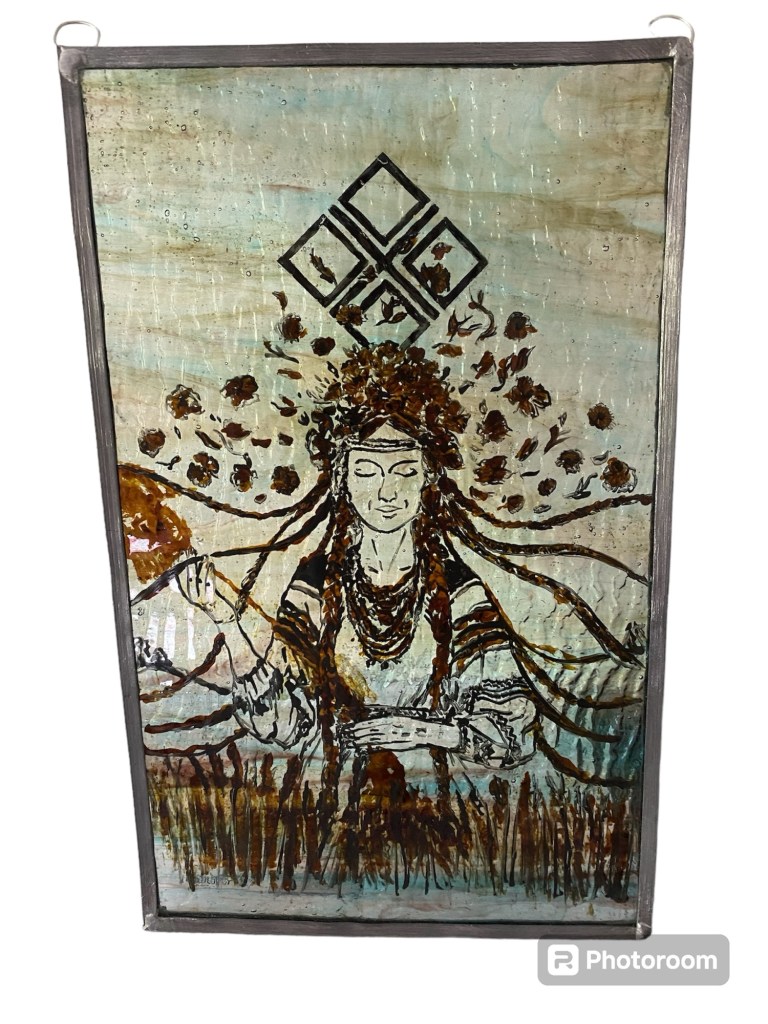
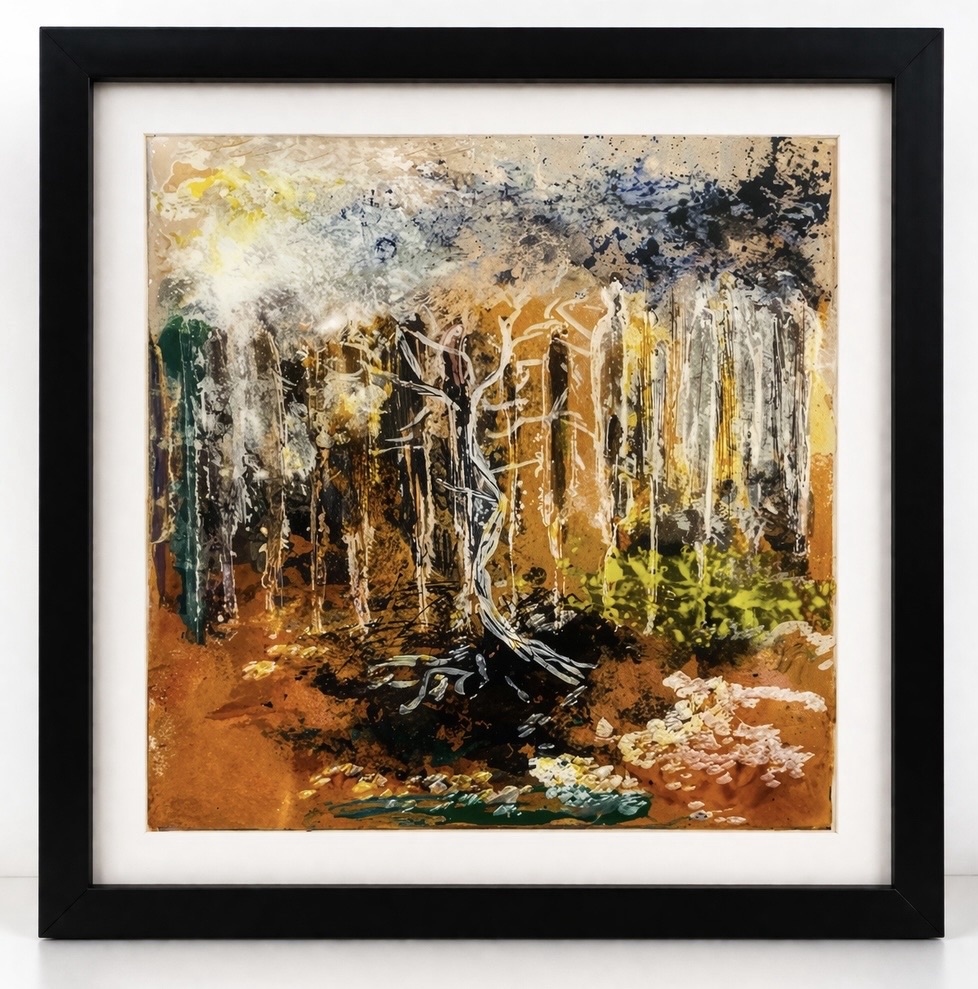
Stained glass painted and fired @monikatkaczyk






Leave a comment