
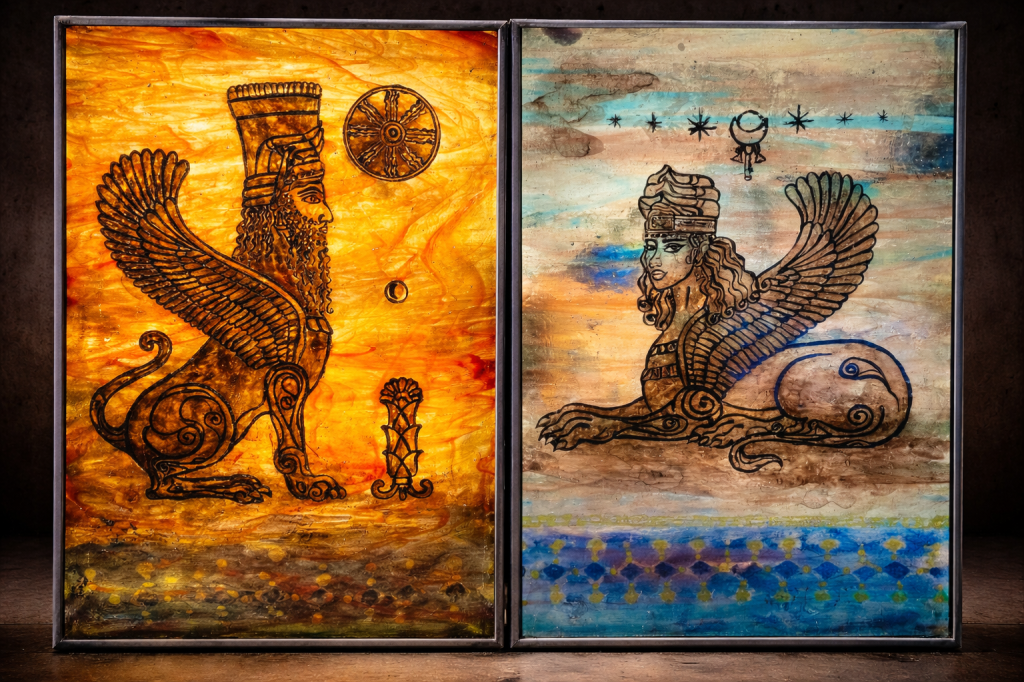
Ishtar’s primary legacy from the Sumerian tradition is the role of fertility figure; she evolved, however, into a more complex character, surrounded in myth by death and disaster, a goddess of contradictory connotations and forces—fire and fire-quenching, rejoicing and tears, fair play and enmity.

Stained glass painted and fired @monikatkaczyk
The husband of goddess Ishtar was #Dumuzi, also known as Tammuz, who was worshiped as the god of shepherds. Ishtar was worshipped primarily as the goddess of both love and war, and she was associated with aspects of these areas such as sex, fertility, and political power.

Stained glass painted and fired @monikatkaczyk

Stained glass painted and fired @monikatkaczyk








Leave a comment