
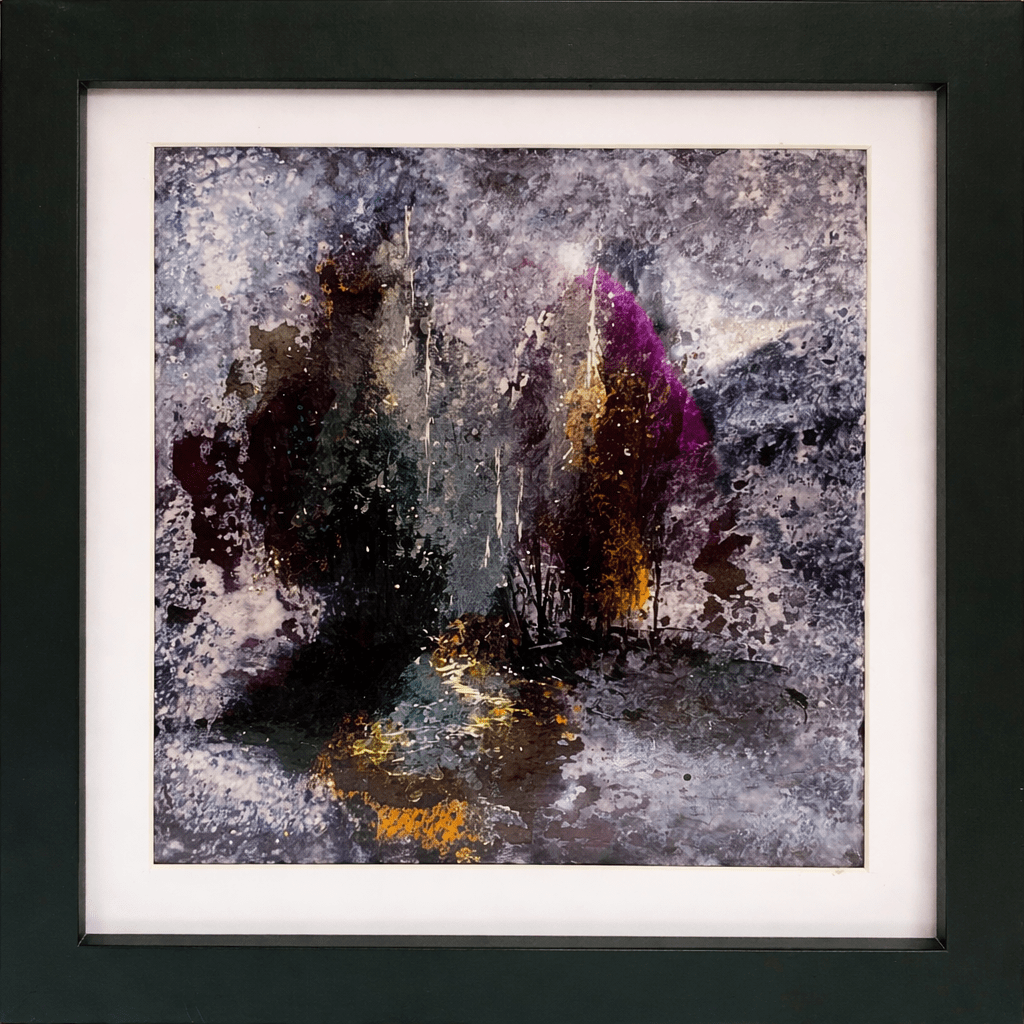
Abstract “ Pulse of Night: Echo of Saul’s”
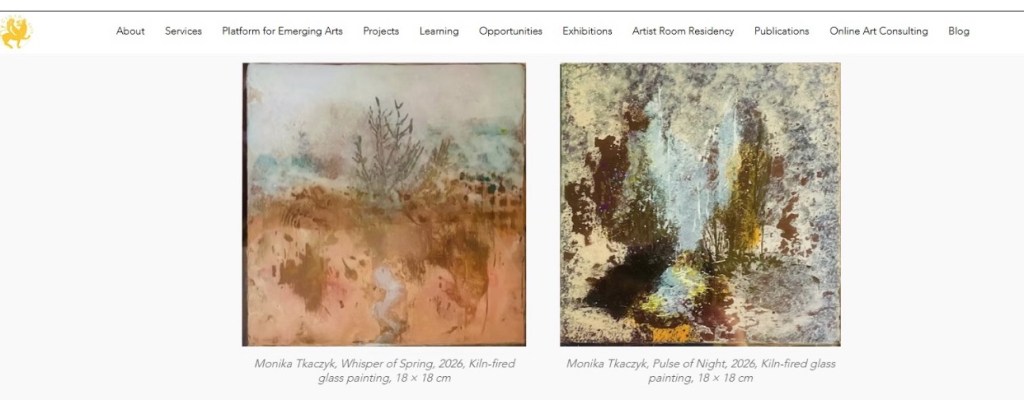
In this work, darkness is not empty; it is charged, breathing, and quietly watchful. Deep violets, indigos, and almost-black forms gather at the base like dense thoughts or heavy memories. They suggest the inner landscape of someone who has walked far into their own convictions—strong, determined, but also closed, rigid, and perhaps unable to see what lies beyond their own certainty. This is the psychological state of Saul before his encounter: powerful, focused, but locked inside a single way of seeing the world.
From this concentrated shadow, vertical shafts of light rise, cutting through the gloom. They do not spread softly like a sunrise; they fall sharply, almost like blades or pillars, signalling a sudden interruption rather than a gentle transition. Psychologically, these vertical accents can be read as moments of insight that break through an old identity—a disruptive illumination that cannot be ignored. Just as the blinding light on the road to Damascus stops Saul in his tracks, the luminous streaks in your painting stop the eye, creating a tension between what is solid and what is dissolving.
The misty, textured background feels unstable, as if the air itself is shifting. Swirls and speckles of lighter pigment suggest that reality is no longer fixed; the world Saul thought he knew begins to tremble. This instability is essential in any deep inner transformation: the psyche must pass through a phase where old certainties crumble, and nothing feels fully reliable. In that space, the ego experiences both terror and liberation. Your surface textures hold this dual quality—storm and revelation, chaos and grace.
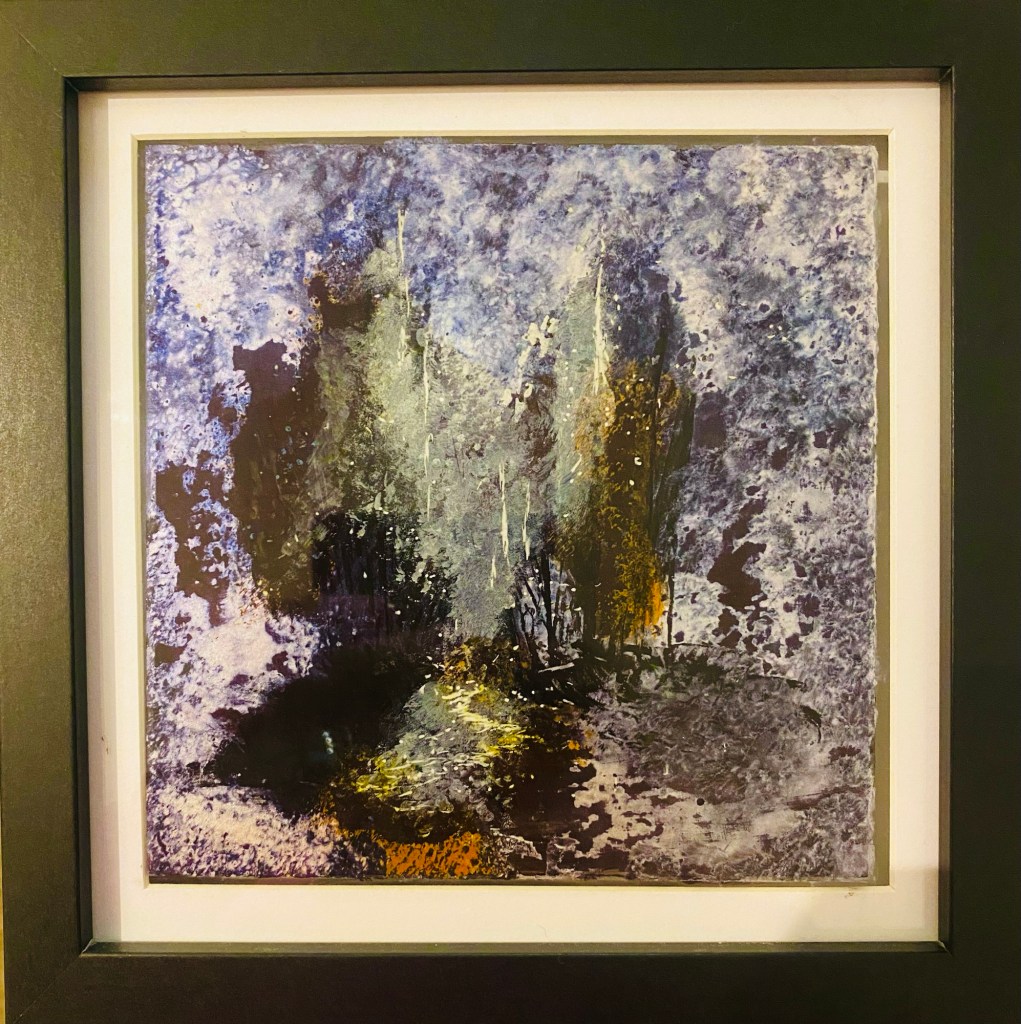
The touches of warm gold and earthy ochre act like embers inside the night. They carry the sense of something precious being forged in the darkness: wisdom, humility, and a more compassionate strength. These small, burning notes evoke the moment when Saul becomes Paul—when raw will is refined into purposeful devotion. Psychologically, they represent a shift from power that dominates to power that serves, from control to attunement. The masculine energy here is no longer loud or aggressive; it is contained, grounded, and ready to listen.
Compositionally, the image pulls the viewer inward and upward at the same time. The dense forms at the bottom hold the weight of history—guilt, past actions, rigid beliefs. The vertical lines lift that weight, inviting the eye to follow them towards an unseen source of light beyond the frame. This upward movement is the journey of conscience: the willingness to face what we have done, accept responsibility, and open to a new calling. The painting does not show a literal figure, but the whole structure behaves like an interior portrait of Saul’s turning point.
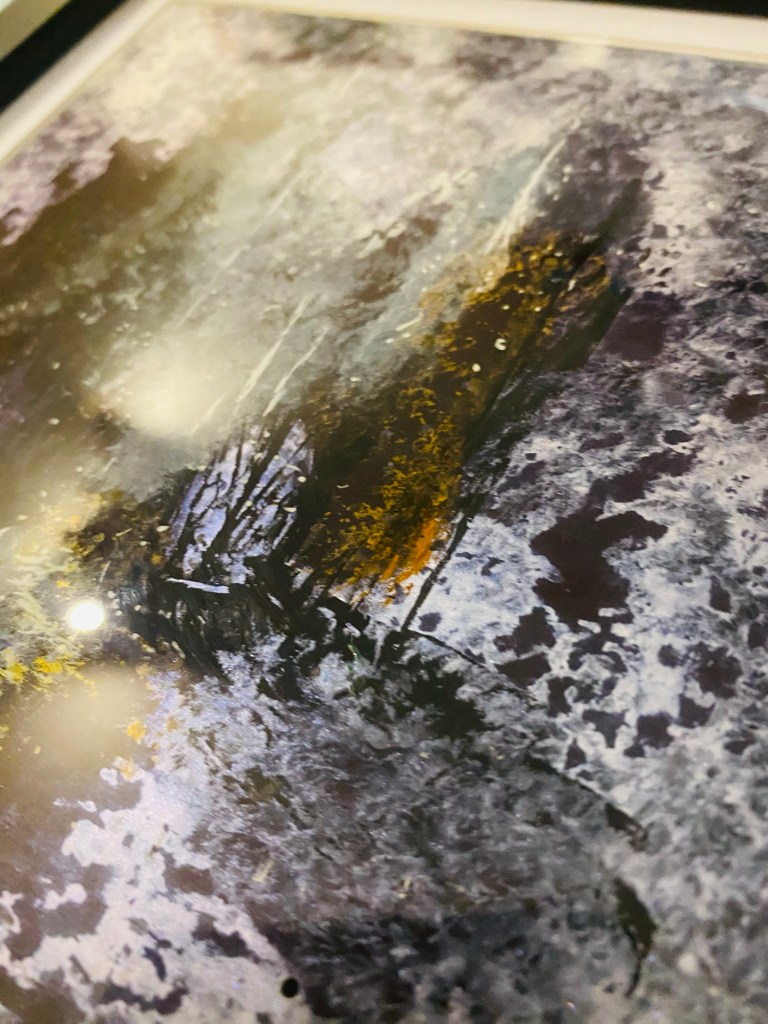
“Pulse of Night” therefore speaks to anyone standing in the middle of a radical inner shift. It acknowledges that true transformation is rarely soft or comfortable; it feels like being struck, stopped, and temporarily blinded. Yet within that shock lies a profound invitation: to allow our strongest qualities—will, discipline, clarity—to be reoriented toward a deeper truth. The work becomes a visual meditation on the courage to let an old self die so that a more aligned, compassionate self can emerge.
Seen as the masculine counterpart to “Whisper of Spring,” this piece completes a psychological polarity. Where “Whisper” expresses gentle, receptive awakening, “Pulse of Night” shows the moment of decisive rupture and re-direction. Together, they suggest that inner growth requires both energies: the quiet, feminine capacity to receive and feel, and the steady, masculine capacity to act, commit, and walk a new path once the light has appeared.





Leave a comment